Investing in Talent Is Investing in Better Public Policy
-
Stefania Paredes Fuentes
![author image]()
Head of the Economic Education - 21 Sep 2026

-
Vladimíra Repášová
![author image]()
Director of the Economic Education and Technical Cooperation
-
Eva Gonçalves
![author image]()
Central banks are often associated with interest rates, financial stability and crisis management. Yet behind every policy decision stands something equally important: the people who analyse economic developments, design policy responses and explain those decisions to the public.
In an increasingly complex world, investing in economic education is a strategic investment in better policymaking, stronger institutions and greater public trust. For us, cultivating talent is core part of institutional resilience.
The environment in which central banks operate has become significantly more demanding. Policymakers must navigate technological transformation, geopolitical uncertainty, demographic change, climate-related risks and rapidly evolving financial markets.
Success in this environment requires far more than technical expertise in economics.
Today’s policymakers need strong analytical skills, intellectual curiosity and the ability to communicate complex issues clearly to diverse audiences.
They must also be able to make sound judgements under uncertainty while understanding how policy decisions affect households, businesses and society more broadly.
Developing these capabilities takes time. It requires opportunities to apply academic knowledge to real-world challenges and to gain experience at the intersection of economic research, financial regulation and policy. Central banks are uniquely positioned to create such opportunities.
Recognising these challenges, the National Bank of Slovakia (NBS) has launched its international Graduate Education Programme (GEP), designed to help bridge the gap between academic study and practical policymaking.
The programme offers participants hands-on exposure to a range of central banking functions while encouraging collaboration across different areas of the institution. At the same time, it contributes to addressing one of Slovakia’s longstanding challenges: retaining and attracting highly talented graduates.
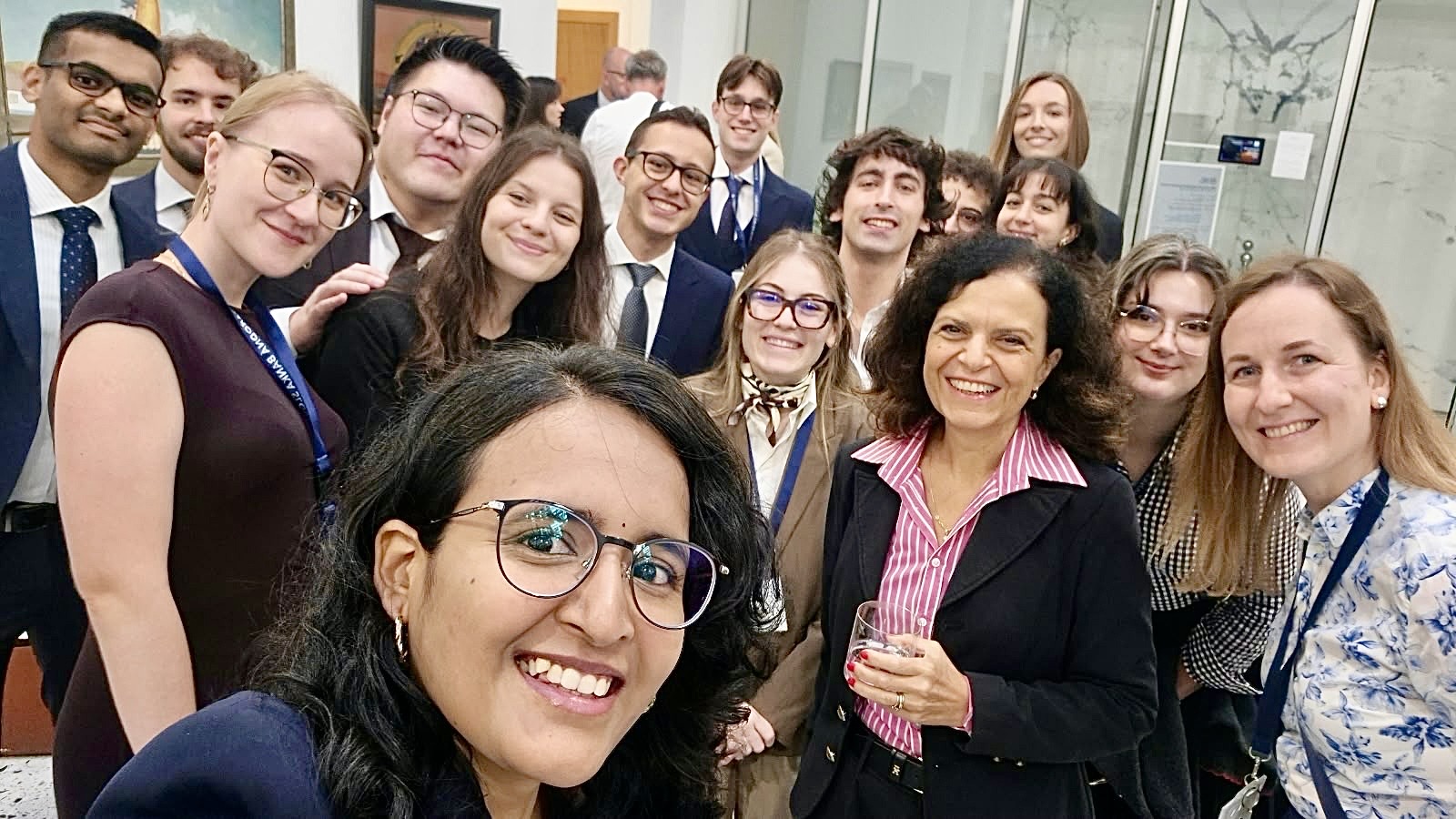
Selection into the programme is based on a competitive, merit-based process aimed at identifying individuals with strong analytical potential and a commitment to public service.
In its inaugural year, the programme brought together fourteen participants, including four Slovak nationals, creating an international environment for learning and professional development.
Not every participant will ultimately pursue a long-term career at NBS. However, the value of the programme extends beyond the institution itself.
Initiatives of this kind help create a broader pool of highly qualified professionals who can contribute to public administration, financial institutions, academia and the wider economy.
They strengthen future recruitment pipelines and support succession planning within public institutions.

For Slovakia, human capital is a particularly valuable resource. Investments in education and professional development can generate benefits that extend well beyond individual organisations.
By nurturing expertise and fostering links between academia, the public sector and private industry, such programmes enhance resilience of policy ecosystem.
As central banks confront increasingly complex economic and financial challenges, their effectiveness will depend not only on the tools at their disposal but also on the quality of the people who use them.
Economic education is therefore an essential component of central banking.
It helps build analytical capacity, supports evidence-based decision-making and strengthens the institutions responsible for safeguarding economic and financial stability.
Ultimately, resilient institutions are built on human capital.
By investing in the next generation of economists and policymakers, central banks strengthen their ability to serve society, adapt to future challenges and maintain public trust.
That is why economic education belongs at the heart of central banking.
Mailing list: If you would like to be notified when the next Blog is published, please sign up to the NBS mailing list.