Governor of NBS P. Kažimír: Strategic Vigilance in Volatile Times
By Jana Randow, Mark Schroers and Alexander Weber
(Bloomberg) — The Iran war and its impact on inflation risk forcing the European Central Bank to raise interest rates sooner than anticipated, according to Governing Council member Peter Kazimir.
While the ECB is still in a “good place” and there’s no need to act at next week’s meeting, Kazimir worries that memories of the region’s 2022 inflation shock have lowered the threshold for businesses to raise prices and consumers to demand higher pay. Upside risks clearly dominate the outlook, he said.
“For the time being, we need to stay calm,” even though “I’d say a reaction by the ECB is potentially closer than many people think,” Kazimir said Tuesday in an interview in Frankfurt. “I don’t want to speculate about April or June. But we will be ready to act if needed.”
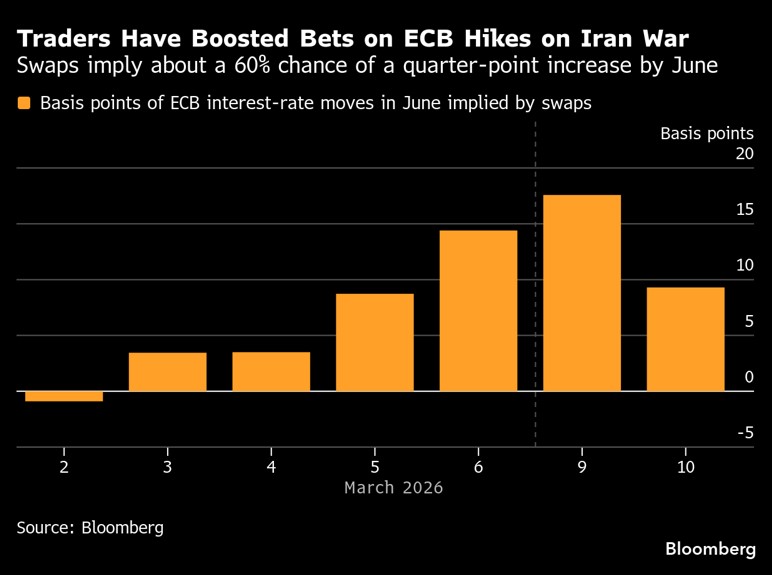
Traders are leaning toward an interest-rate increase in June or later, betting that surging energy costs due to the conflict in the Middle East will make the ECB act. They have, however, dialed back Monday’s wagers for two quarter-point hikes this year after Donald Trump said the war could end “very soon.”
The euro held gains after Kazimir’s comments.
ECB officials are urging patience but recognize that the progress they’ve made to restore price stability after euro-zone inflation shot past 10% four years ago is in jeopardy. Economic growth is, too, with sentiment already souring.
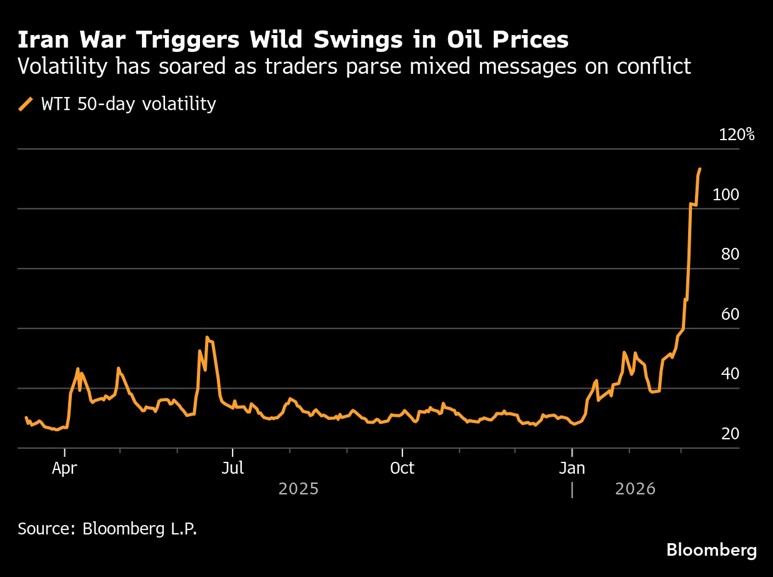
“The situation is very volatile — dramatic even — and a panicking by markets and politicians could be a risk,” said Kazimir, who also heads Slovakia’s central bank.
He suggested he was unhappy with the situation even before events in Iran, with services prices proving sticky, goods costs not slowing quickly enough and profit margins widening. He’s even more concerned now.
“The balance of risks regarding inflation has clearly shifted to the upside,” he said. “We can forget about all the discussions about an inflation undershoot.”
Expectations, an early indicator of the longer-lasting consequences of price shocks, have started to rise, according to Kazimir.
“Businesses still remember the inflation years and will likely pass-through higher costs much more quickly to consumers than in 2022,” he said. “And people will ask for higher wages more quickly than in the past.”
Signs of such second-round effects could warrant rate increases. Policymakers look better prepared than in 2022, when the remnants of quantitative easing and a commitment to loose policy tied their hands.
“We can respond more quickly if necessary,” Kazimir said. “We have to be agile. We have also learned our lessons.”
Quarterly ECB projections — due this month and again in June — aren’t a prerequisite, he argued. “I have no reservations against hiking without new forecasts. What’s clear is that considerations on further cuts are definitely off the table now.”
Kazimir’s pledge to be nimble echoes his peers. Austria’s Martin Kocher stressed Tuesday that the ECB retains “full optionality” and Greece’s Yannis Stournaras has made a case to be “flexible.” Meanwhile, President
Christine Lagarde, France’s Francois Villeroy de Galhau and Latvia’s Martins Kazaks have said the ECB won’t allow inflation to take hold.
At the same time, the Slovak isn’t the only one foreshadowing a potential hike. Estonia’s Madis Muller said the chances of an increase have risen, while Bundesbank President Joachim Nagel said officials will decide this month “whether the current monetary-policy stance remains appropriate.”
Despite the uncertainty, Kazimir is still “quite optimistic on growth” and not “too worried” about stagflation.
He warned governments against shielding consumers and businesses from high energy costs with expensive support measures, considering precarious fiscal situations in some member states.
“There’s no doubt that governments will come up with ideas on how to offer at least some relief,” he said. “I’d strongly advise against it and would encourage them to be very targeted and very time-limited. But in the past that’s never happened.”
Kazimir said he’s convinced Lagarde will serve out her term, having failed to quell speculation that she’ll leave early.
She “clearly said that she’s committed to finishing her term — it was a quite clear message to us,” he said. “If something happens in the future, that’s OK, we’ll deal with that. But this is not the time to speculate.”
European institutions need leadership at the current juncture, he added. “Doubts about if somebody will be there or not aren’t good.”