500th anniversary of the Battle of Mohács
€100 gold collector coin
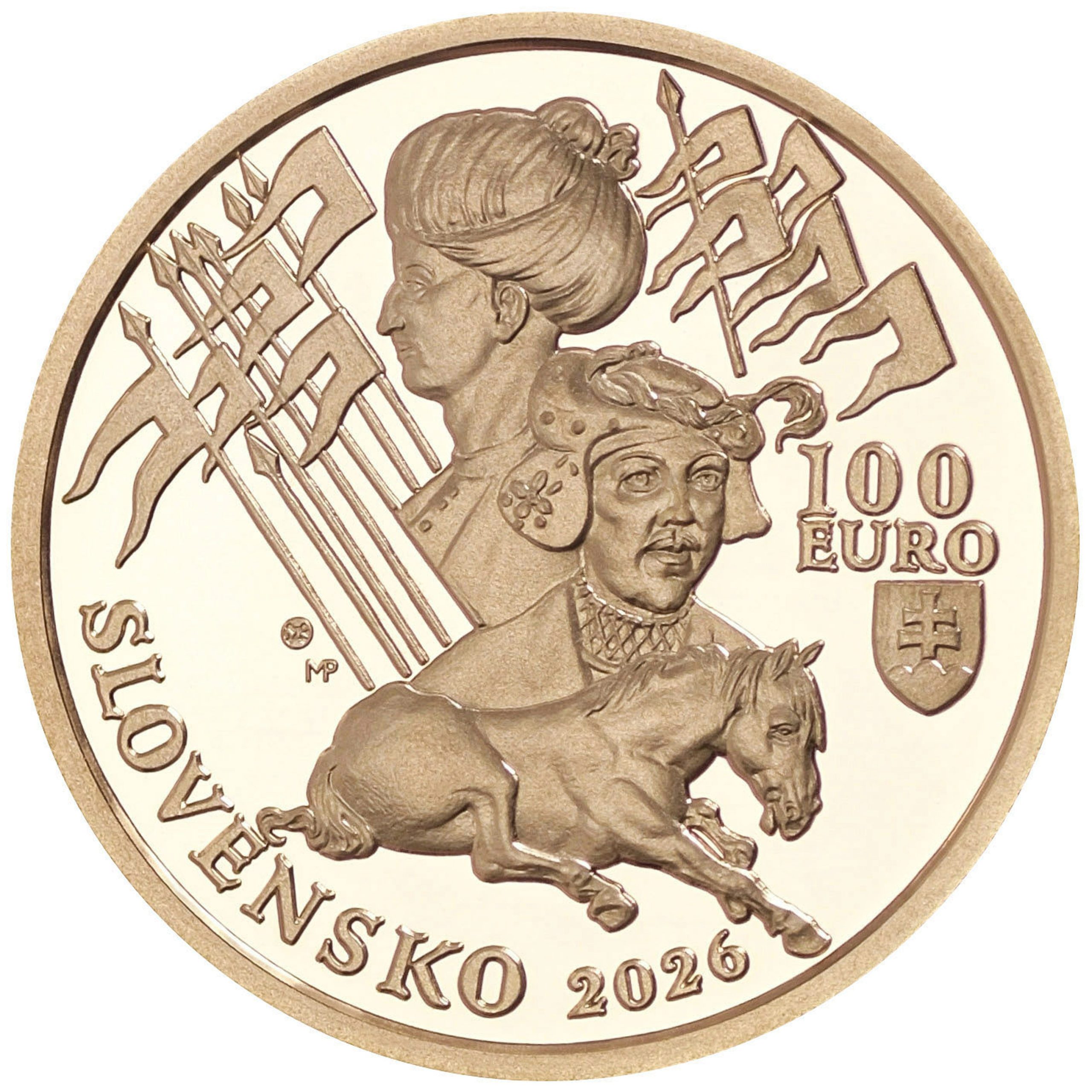
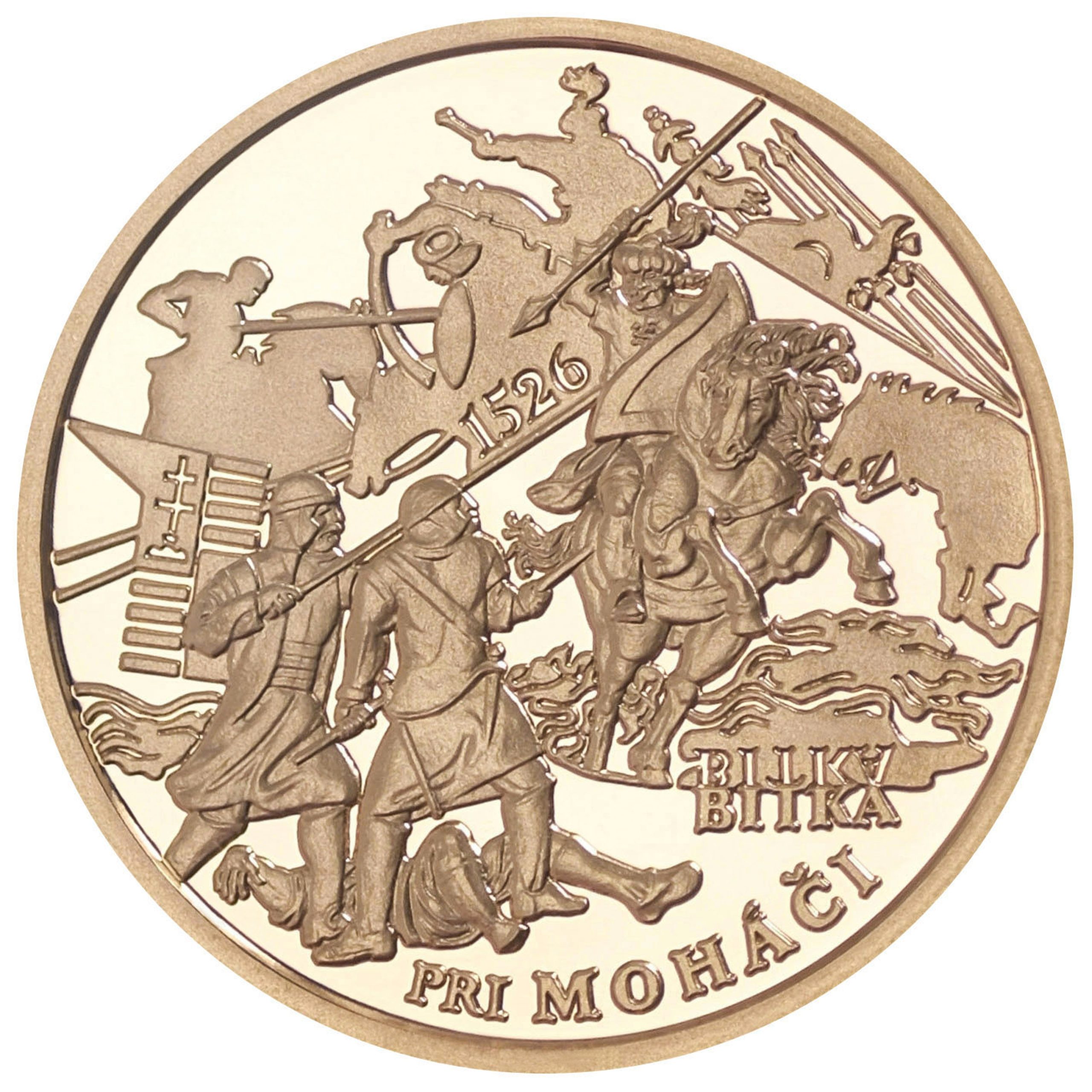
The Battle of Mohács of 29 August 1526 ranks among the most significant turning points in the history of central Europe. The short yet decisive clash between the forces of Hungary and the invading Ottomans marked the end of one era and ushered in profound political and social changes. The Kingdom of Hungary, weakened by internal unrest, financial difficulties, and limited support from its European allies, was unable to withstand the military superiority of the Ottoman Empire, which possessed a larger army and more modern weaponry. The defeat resulted in the death of King Louis II and the partial collapse of the secular and ecclesiastical elite, while opening the way for the Ottomans to the capital, Buda. The subsequent events led to Hungary’s incorporation into the Habsburg monarchy and to long-term transformations that shaped the political development of the region for centuries to come.
-
Coin description
Obverse:
The centre of the obverse design features a portrait of Sultan Suleiman the Magnificent above a portrait of King Louis II of Hungary. Below the king’s portrait is a fallen horse, alluding to his death at the Battle of Mohács. To the left and right of the portraits are spears and battle standards. Inscribed on the right of the coin field are the coin’s denomination ‘100’ and currency ‘EURO’, above the Slovak coat of arms. The name of the issuing country ‘SLOVENSKO’ and the year ‘2026’ run along the lower edge from the mid-left side. In the lower left, are the mint mark of the Kremnica Mint and the stylised initials ‘MP’ of the coin’s designer, Mária Poldaufová.Reverse:
The reverse depicts a dramatic scene from the Battle of Mohács. The right side of the design is dominated by an Ottoman cavalryman on horseback, directing a spear at two Hungarian infantry soldiers in the lower left, below whom is a fallen soldier. In the background are additional cavalry in silhouette and a group of spears with battle standards. A battle standard on the left bears the coat of arms of the Kingdom of Hungary. The year of the battle ‘1526’ is inscribed diagonally across the centre of the design. The word ‘BITKA’ (Battle) appears in the lower right, below the horse, with its reflection in water depicted in incuse. The words ‘PRI MOHÁČI’ (at Mohács) run along the bottom right edge.
-
Coin details
Designer: Mária Poldaufová Composition: .900 gold, .75 silver, .25 copper Weight: 9,5 g Diameter: 26 mm Edge: milled Producer: Kremnica Mint Engraver: Jakub Morávek Issuing volume: 3,900 coins in proof quality Issuing date: 27 August 2026