Fauna and flora in Slovakia – the alpine marmot
€5 base metal collector coin
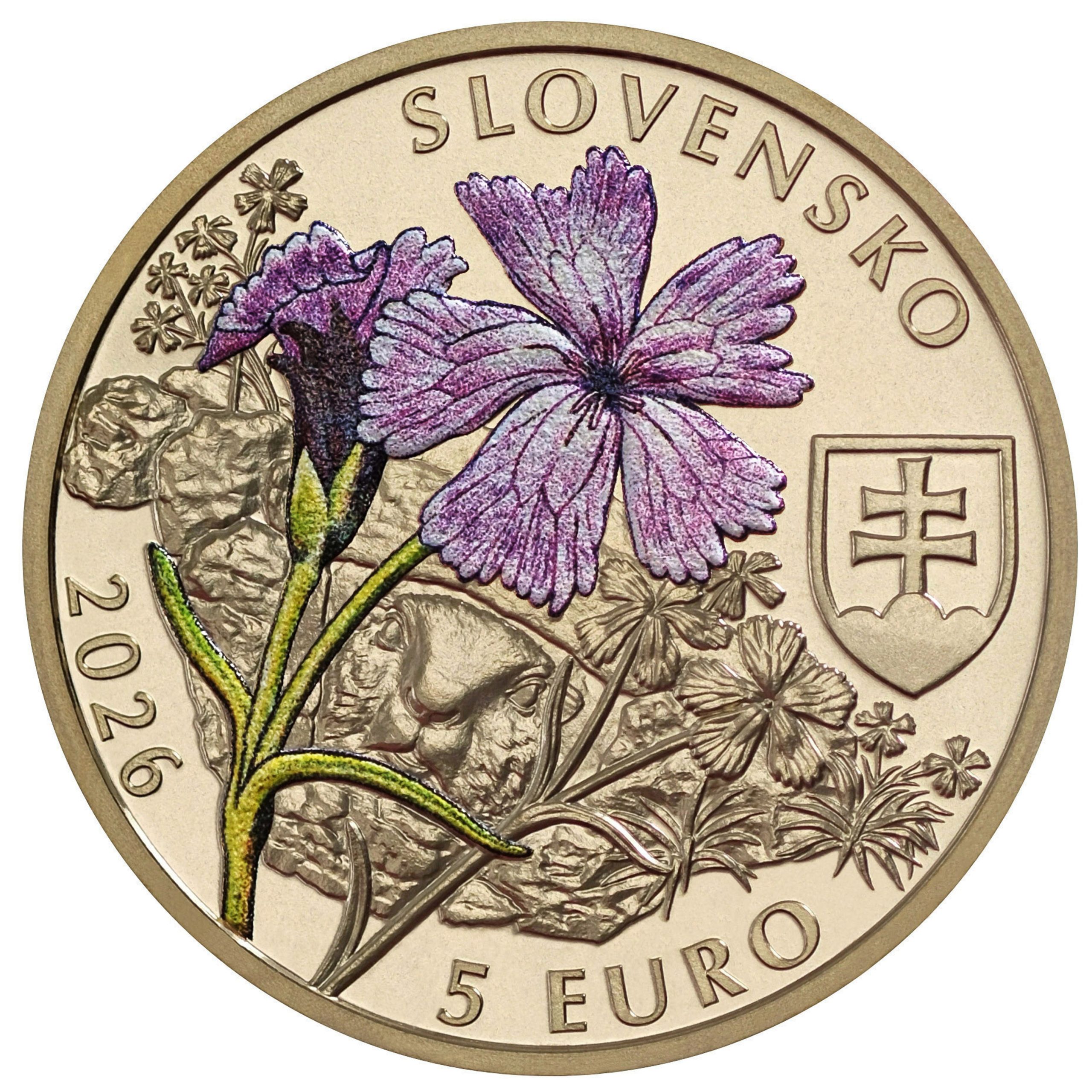
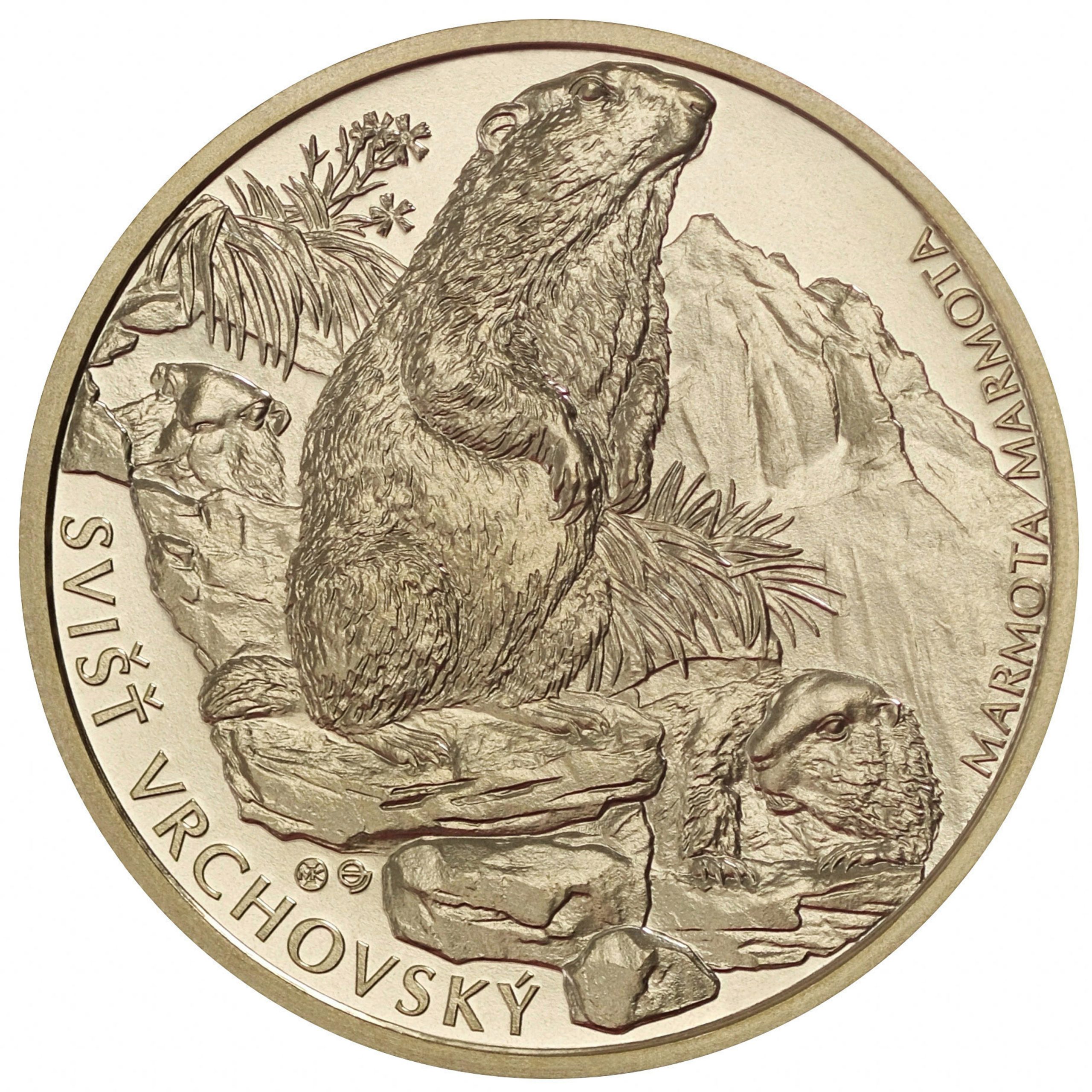
The alpine marmot (Marmota marmota), a large ground-dwelling member of the squirrel family, is one of the most iconic symbols of Slovakia’s highest mountain ranges, alongside the Tatra chamois. The Tatra marmot (M. m. latirostris), a subspecies endemic to Slovakia, has persisted in this territory since the end of the Ice Age. It inhabits the High Tatras, Belianske Tatras, Western Tatras, and Low Tatras, living above the treeline at elevations of 1,400 to 2,300 metres above sea level. The marmot is a stocky rodent reaching a length of 40 to 60 cm and a weight of up to 8 kg. It spends most of its life in extensive underground burrows that provide shelter, a place to raise its young, and quarters for hibernation. Marmots live in colonies with highly developed social behaviour and warn one another of danger with a characteristic whistle. Their hibernation period is among the longest of any mammal, extending for up to seven months. Their diet consists mainly of alpine herbs and grasses, and they build up fat reserves to survive the winter. Their principal natural predators are eagles, foxes and lynxes. In Slovakia, the Tatra marmot is threatened by unfavourable environmental conditions, human disturbance, and the loss of suitable habitats. It is therefore classified as Critically Endangered and ranks among the rarest animals in the country’s natural heritage. Protecting its high-mountain habitats is essential to preserving this unique symbol of the Tatras for future generations.
-
Coin description
Obverse:
The obverse depicts an image of various alpine flora, dominated by a blooming flower of the Carpathian glossy pink rendered in colour. Hidden within this image is an alpine marmot peering out from its burrow. On the right of the coin field is the Slovak coat of arms. The name of the issuing country ‘SLOVENSKO’ is inscribed along the upper right edge, and the year of issue ‘2026’ appears along the lower left edge. The denomination and currency name ‘5 EURO’ are inscribed above the lower edge.Reverse:
The reverse shows an alpine marmot standing guard on a rocky outcrop with its head raised. Behind it, a second marmot can be seen peering out, while a third emerges from the ground to the right. The background features a rocky massif complemented by characteristic alpine flora. The inscription ‘MARMOTA MARMOTA’, the scientific name of the alpine marmot, appears along the right edge of the coin field, while the Slovak name ‘SVIŠŤ VRCHOVSKÝ’ is inscribed in a larger font along the lower left edge. Above the Slovak name are the stylised initials ‘JO’ of the coin’s designer, Josef Oplištil, and the mint mark of the Kremnica Mint, consisting of the letters ‘MK’ between two dies.
-
Coin details
Designer: Josef Oplištil Composition: brass MS63 Weight: 19.1 g Diameter: 34 mm Edge: milled Producer: Kremnica Mint (Slovakia) Engraver: Jakub Morávek Issuing volume: 65,000 euro coins (initially and possibly more subsequently)
For the Bank’s promotional purposes, 1,500 of these collector coins were packaged in a green coin box.Issuing date: 3 December 2026