Fauna and flora in Slovakia – the European pond turtle
€5 base metal collector coin
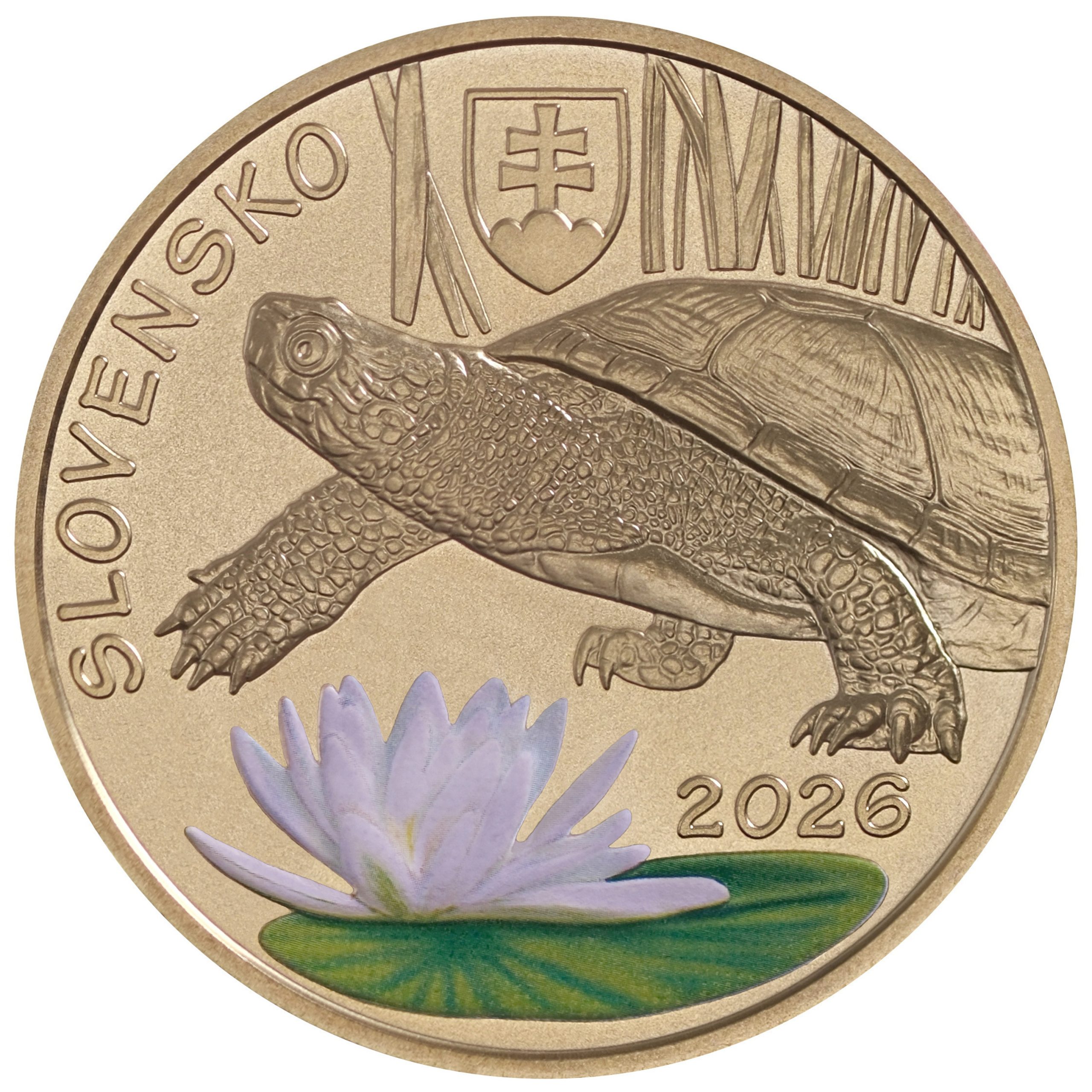
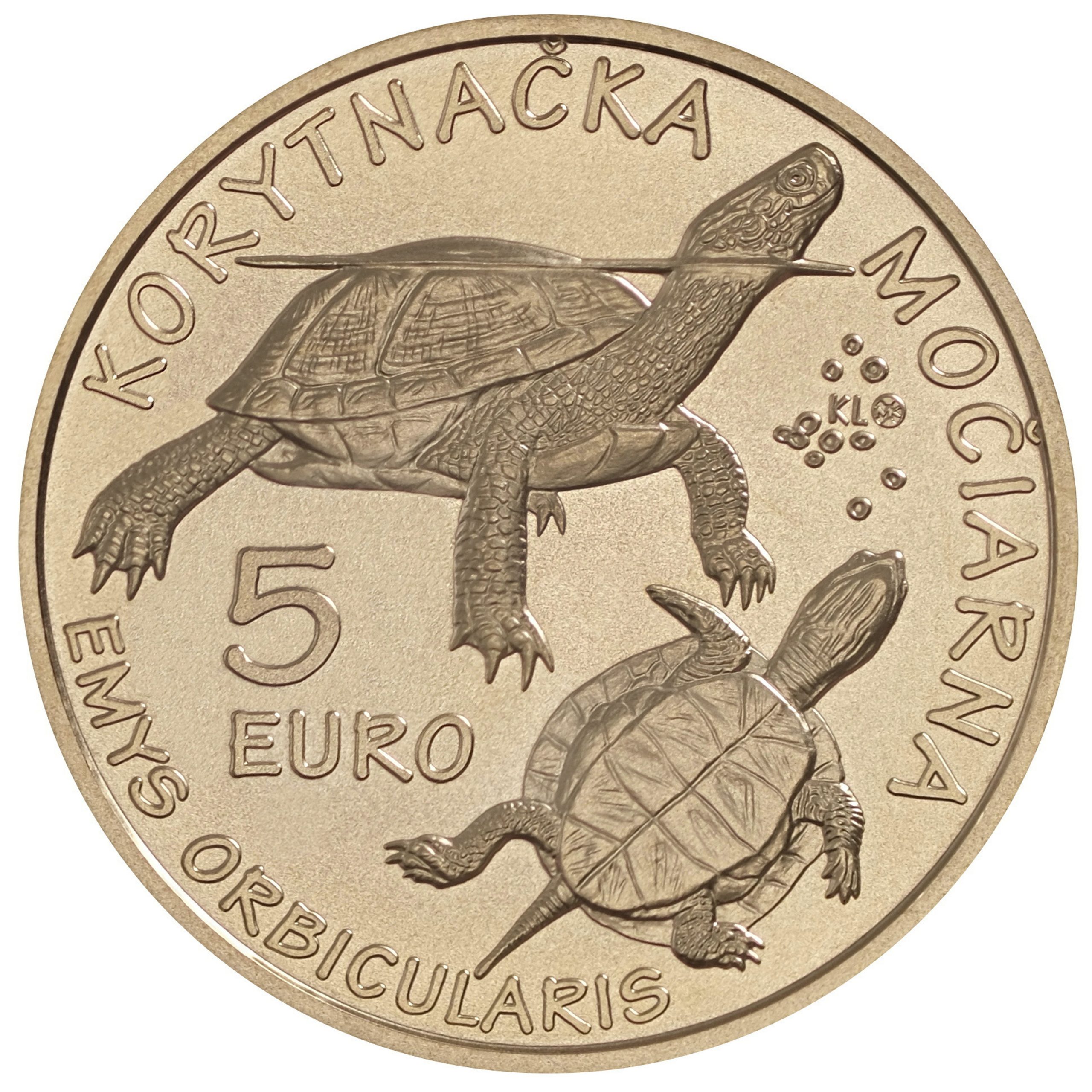
The European pond turtle (Emys orbicularis) is an aquatic turtle species. Native to Slovakia, the pond turtle was once widespread throughout the south of the country, but today its strongest populations are found in the Eastern Slovak Lowland and the Danubian Lowland. It is a protected reptile species that can live for more than 100 years. The pond turtle inhabits still or slowly flowing waters with muddy bottoms and rich vegetation, such as oxbow lakes, canals, ponds, lakes, and marshes. It is an excellent swimmer and diver and often basks in the sun on banks, tree trunks, or stones. Sandy areas are essential for egg laying. After overwintering, the hatchlings dig their way out and move to the water. Adults hibernate underwater, buried in mud. The pond turtle’s diet consists mainly of aquatic invertebrates, but it also feeds on frogs, tadpoles, fish, algae, and plants. Appropriate measures to support its conservation include the restoration of wetlands and nesting sites in their surroundings, as well as preventing the release of non-native invasive turtle species into the wild.
-
Coin description
Obverse:
The obverse depicts a European pond turtle (Emys orbicularis) in its natural habitat. The bottom of the field features a white water lily rendered in colour. Above the turtle is the Slovak coat of arms, and below it, in the lower right, is the year of issuance ‘2026’. The name of the issuing country ‘SLOVENSKO’ is inscribed along the upper left edge.Reverse:
The reverse design consists of two European pond turtles swimming in water. To their left are the coin’s denomination ‘5’ and currency ‘EURO’, one above the other. The inscription ‘KORYTNAČKA MOČIARNA’, the Slovak name of the European pond turtle, runs along the edge of the field from the upper left to the lower right, while the scientific name ‘EMYS ORBICULARIS’ is inscribed along the lower left edge. On the right side, among the bubbles between the turtles’ heads, are the stylised initials ‘KL’ of the coin’s designer, Karol Ličko, and the mint mark of the Kremnica Mint (Mincovňa Kremnica), consisting of the letters ‘MK’ between two dies.
-
Coin details
Designer: Karol Ličko Composition: brass MS63 Weight: 19.1 g Diameter: 34 mm Edge: milled Producer: Kremnica Mint (Slovakia) Engraver: Jakub Morávek Issuing volume: 55,000 euro coins (initially and possibly more subsequently)
For the Bank’s promotional purposes, 1,500 of these collector coins were packaged in a green coin box.Issuing date: 17 March 2026